
Leather is broadly categorized into four grades: full-grain, top-grain, split-grain, and bonded leather. However, this is a general guide, as there are as many variations in leather quality as there are tanneries.
Each grade represents distinct attributes that directly affect durability, wear resistance, and feel.
When buying real leather goods—such as handbags, coats, or wallets—you will often find a stamp on the underside categorizing the material. Unfortunately, this stamp is sometimes hidden by the lining.
One common designation you’ll see is “Genuine Leather.” Despite sounding premium, it is often considered one of the lowest grades of leather. Tests show that its tensile strength can even be lower than faux (polyurethane) leather. Genuine leather is frequently made from tannery leftovers—bonded scraps, fibers, and dust particles combined with resins and processed to mimic solid hide.
Depending on the item and how you intend to use it, choosing the right grade ensures your purchase lives up to your expectations.
The 4 Types of Leather and How They Are Graded
If you plan on buying quality leather goods, being armed with clear information ensures you get the best value for your money.
The four common categories are:
-
Full-Grain Leather
-
Top-Grain Leather
-
Split-Grain Leather
-
Bonded Leather (often marketed alongside “Genuine Leather”)
Note: “Genuine Leather” isn’t technically a formal grading classification, but rather an industry trade term. You may also encounter corrected-grain leather, which is hide that has been abraded to smooth out natural imperfections.
At our core, we believe in keeping consumers informed so you can make the best purchasing choice. Let’s start with the basics: How is leather graded?
1. Splitting the Hide
To begin processing, a section of raw cowhide (ranging from 6mm to 10mm in thickness) is run through a splitting machine based on the intended end product.
For instance, upholstery leather is typically split to 1.2mm, whereas heavy-duty belt leather may range from 3.2mm to 4mm.
The hide is split into two primary layers:
-
The Top (Grain Layer): Yields Full-Grain and Top-Grain leathers.
-
The Bottom (Corium Layer): Yields Split-Grain and suede options.
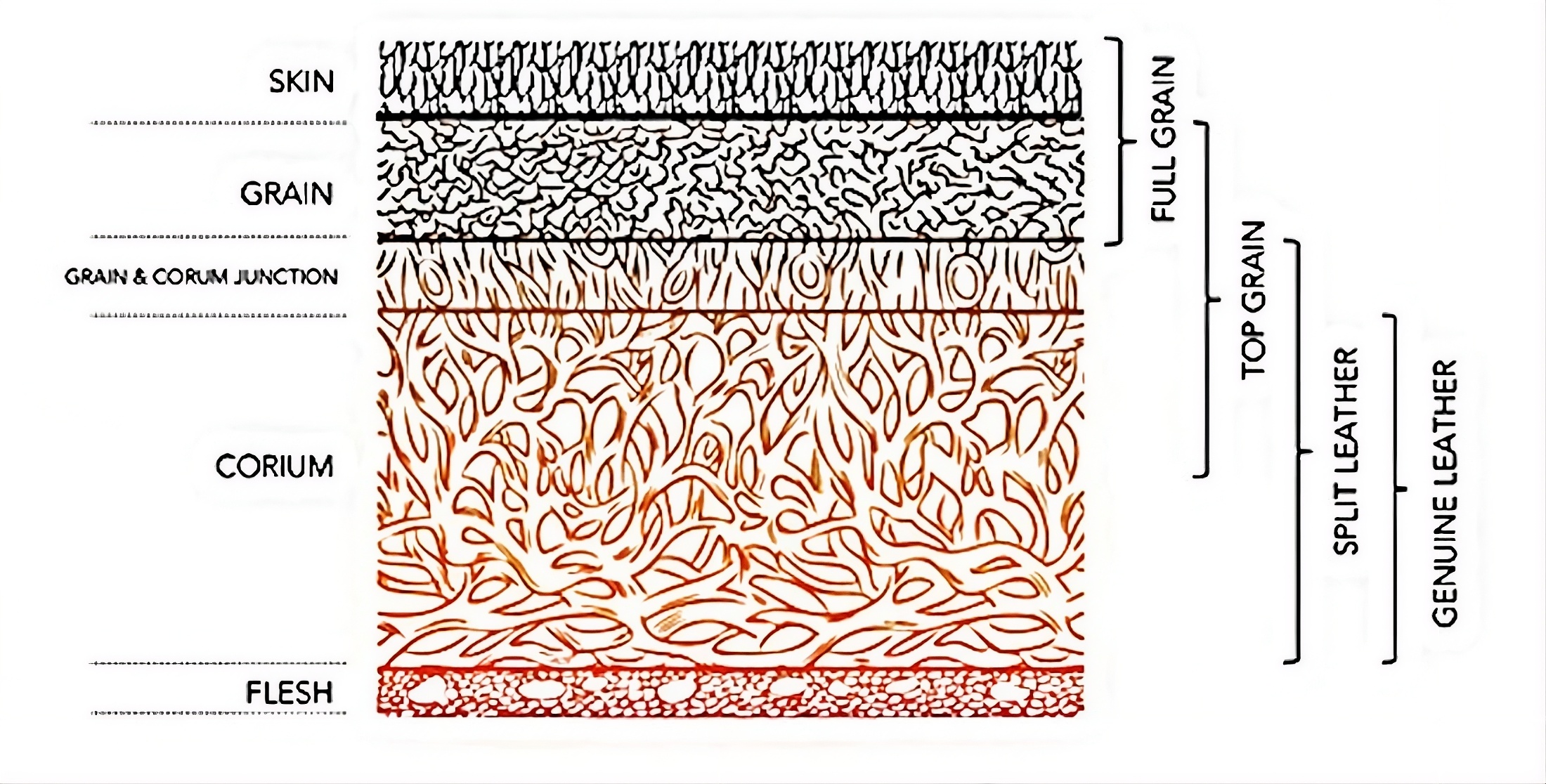
A look at where cuts of leather come from.
2. Full-Grain vs. Top-Grain Leather
As shown in the cross-section diagram above, both full-grain and top-grain come from the upper, strongest portion of the hide.
-
Full-Grain Leather: Encompasses the outermost surface layer (“Skin” and upper “Grain”). It remains completely natural and unbuffed, leaving unique markings intact. Over time, it absorbs natural oils and develops a rich patina.
-
Top-Grain Leather: Extends through the grain layer down toward the corium junction. To achieve a smooth, uniform appearance, the top surface layer is buffed or sanded to remove natural imperfections and sealed with a protective finish.
3. Split-Grain & “Genuine” Leather
-
Split-Grain Leather: Cut from the bottom layer after the top grain has been removed, meaning it contains no natural surface grain. The most common form of split leather is suede, valued for its soft, pliable texture in footwear, jackets, and accessories.
-
Genuine Leather: While made from real hide fibers, it originates from the lowest cuts. Heavily processed and reinforced with backing coats, it lacks natural grain structures and long-term durability.
4. Bonded Leather
Bonded leather is not solid leather. Instead, it is an amalgam of leather dust, scraps, vinyl, plastic, and adhesives bonded together onto a backing sheet. Like low-grade genuine leather, it is an inexpensive option that wears out quickly and is prone to peeling.
In many cases, high-grade waxed canvas or quality vegan alternatives will outlast low-tier bonded leathers.
Making Smart Purchasing Decisions
When shopping for long-lasting leather goods, look closely at the raw edges, grain structure, and material disclosures. High-quality leather is an investment: a well-cared-for full-grain product will last decades and grow more attractive over time.
FAQs About Leather Quality
Is thin leather low quality?
Not necessarily. If the leather is full-grain, thin cuts remain exceptionally strong. Full-grain leather comes from the top layer where collagen fibers are most tightly interlocked.
Thin full-grain leather is frequently used for zip folios, watch straps, and small accessories to keep weight down and permit tight stitching without sacrificing structural integrity. Thinness only compromises durability when dealing with weak, low-density materials like split or bonded leather.